Repair decisions
The glass, the part or the whole window: how to decide
If the frame is sound and one part has failed, change that part: a fogged thermos, a worn crank, tired weatherstripping. If the wood is soft, air leaks through the frame itself, or the window is failing piece by piece, a new window makes more sense. Two local rules shape the choice: the subsidies pay only for complete replacement, and several boroughs favour keeping or restoring original windows.
The diagnosis in four questions
Most Montreal homes predate the 1980s, and many plexes carry a mix: original wood windows at the front, newer replacements at the back, a balcony door on each floor. Four questions sort out what you are dealing with.
Is the frame sound?
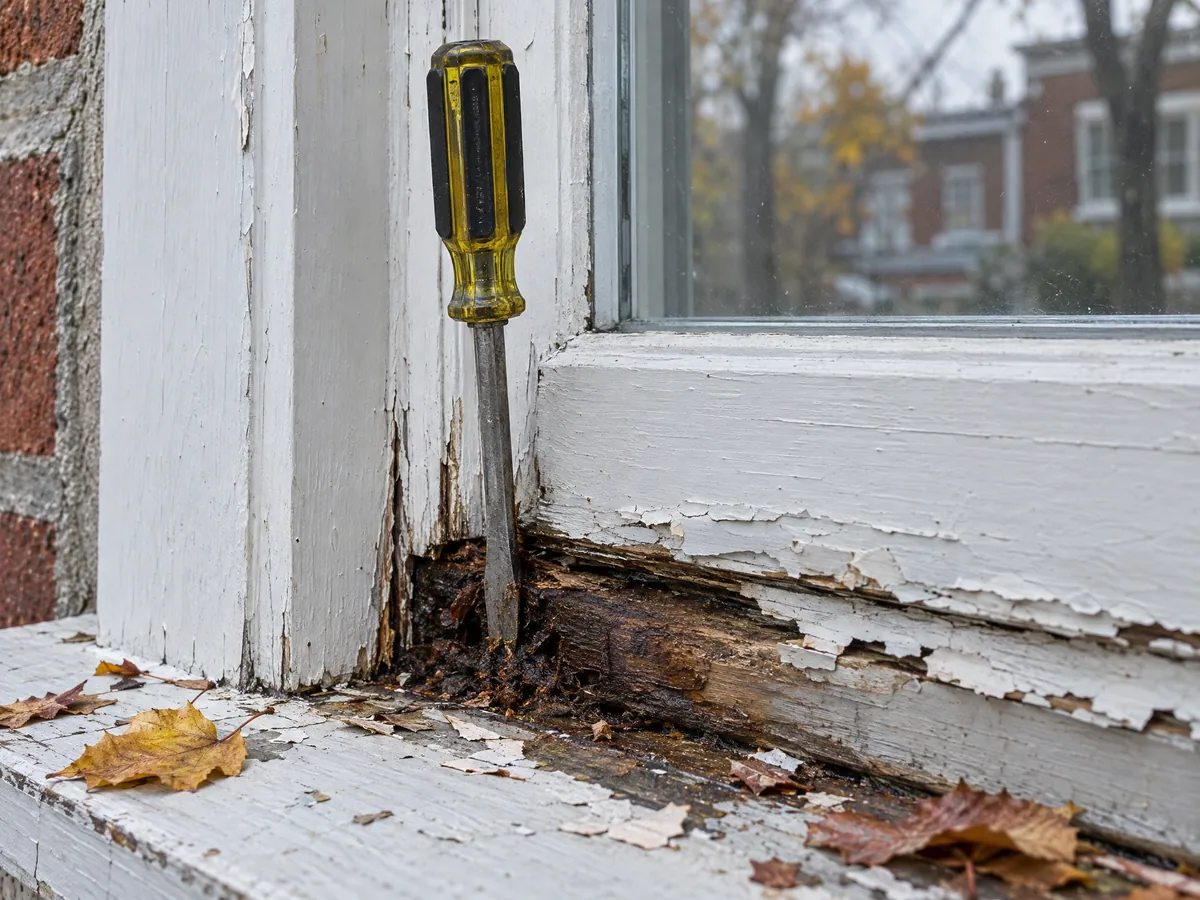
The frame is the part fixed in the wall; the sash, or châssis, is the part that opens. Press a screwdriver into the bottom corners of the sash and into the sill, where water sits. Firm wood, or intact PVC or aluminum, means the frame can take new glass or new hardware. Wood that gives way, crumbles or stays dark and damp points toward replacement.
Is the problem isolated?
One fogged thermos in a bedroom, one crank that spins without catching, one patio door that drags: those are problems with a part. When several units fog in the same season and cold air comes through the frame joints, the window as a whole is reaching its end.
Is the window original?
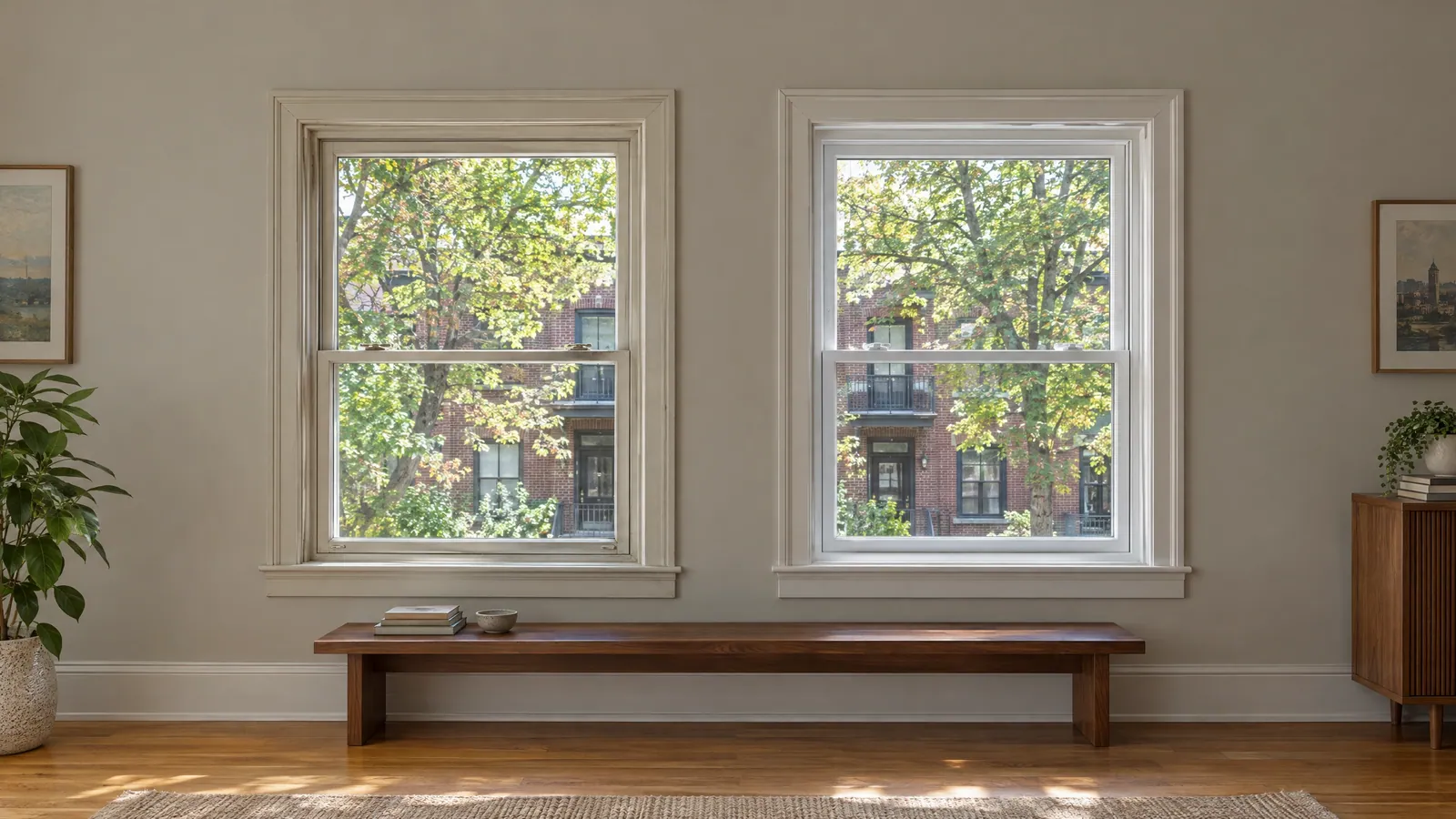
An original wood guillotine, the hung window found in many older plexes, deserves a second look before it is removed. It may well be repairable, and on some streets the borough would rather you kept it. A later replacement failing in several places has less to argue for it.
What does your borough say?
Rules differ by borough. Most require a permit even to replace a window with an identical one, and some add requirements on materials, sliders or appearance. The borough permit guide covers each one.
When changing just the thermos is enough
A thermos is what Montrealers call the sealed unit: two or more panes with a sealed, dry space between them. When the edge seal lets go, moisture gets in and shows up as fog, droplets or white streaks between the panes that no cloth can reach. That is a glass problem, not necessarily a window problem.
If the frame and sash are sound, a glazier can usually measure the unit, have a new one made to size and set it into the existing sash. You keep the window, its hardware and its trim. Settle the spacer colour, any low-E coating and any tint in the quote, so the new unit matches its neighbours. The foggy thermos page sets out the options, défogging included.
When the hardware or weatherstripping solves it
Many "old window" complaints come down to small parts. A casement (battant) window that will not close tightly may need a new manivelle, the crank, or new hinges rather than a new frame. A draught along the sash is often a flattened or torn coupe-froid, the weatherstripping. A guillotine that will not stay open usually has a worn balance. A barrure, the lock, that no longer pulls the sash tight lets cold air in all winter.
These parts wear out long before a good frame does. A photo of the part and its markings helps the pro match it. The window repair page covers cranks, locks and balances.
Signs it is time to replace
- Soft or crumbling wood in the sill, the bottom rail or the frame corners.
- Draughts through the frame itself, not only around the sash.
- Several thermos units failing at once, or failing again soon after being changed.
- A frame that has warped or shifted, so the sash no longer closes square.
- Water getting into the wall around the window after heavy rain.
When most of that list applies, a new window is usually the better use of money. The replacement windows page covers the choices for plexes, including hybrids, and what your borough is likely to ask.
If you rent the flat
In a rental, a draughty or worn-out window starts with your landlord, in writing and with photos. Québec's rental tribunal, the Tribunal administratif du logement, explains how urgent and necessary repairs work for tenants and landlords alike. Landlords can use the rest of this guide the same way, one opening at a time.
What the boroughs say about restoration
Montreal's public rules pull in two directions, and the borough side leans toward keeping what is there.
- Le Plateau-Mont-Royal asks for a permit even for a same-size replacement, and the new window must keep the characteristics of the original components. Repairing original windows, on the other hand, needs no permit except on classified heritage buildings, buildings identified as significant architectural witnesses (témoins architecturaux significatifs), the Mont-Royal heritage site or protected areas. Plateau rules on montreal.ca.
- Ville-Marie requires a permit and states that work aimed at keeping or restoring the original form or appearance is favoured. Ville-Marie rules on montreal.ca.
- Westmount, a separate city, reviews exterior changes under its own architectural by-law with City Council approval, but restoring original components and replacing them identically are excluded from that review. Westmount: windows and doors.
On those streets, repair is often the simpler path on paper as well as the gentler one for the building. Confirm on your borough's page first, because these rules are revised.
What the subsidies actually fund
The money leans the other way: both window programs pay for complete replacement.
- RénoPlex, run by the Ville de Montréal, pays a set amount per replaced window, door and patio door in eligible buildings of two to five dwellings, and its list also includes restoring a wood door. Approval must come before the work starts. RénoPlex program page.
- Rénoclimat, run by the Gouvernement du Québec, supports complete ENERGY STAR windows and doors installed in the existing opening, with energy evaluations before and after. Replacing only the glass, the sash, or a door without its frame does not qualify. Rénoclimat: doors and windows.
That does not make replacement the right answer. A subsidy covers part of a bigger job; a new thermos in a sound frame is a smaller one that keeps more of the building. The subsidy guide explains eligibility and timing.
Patio doors: repair or replace?
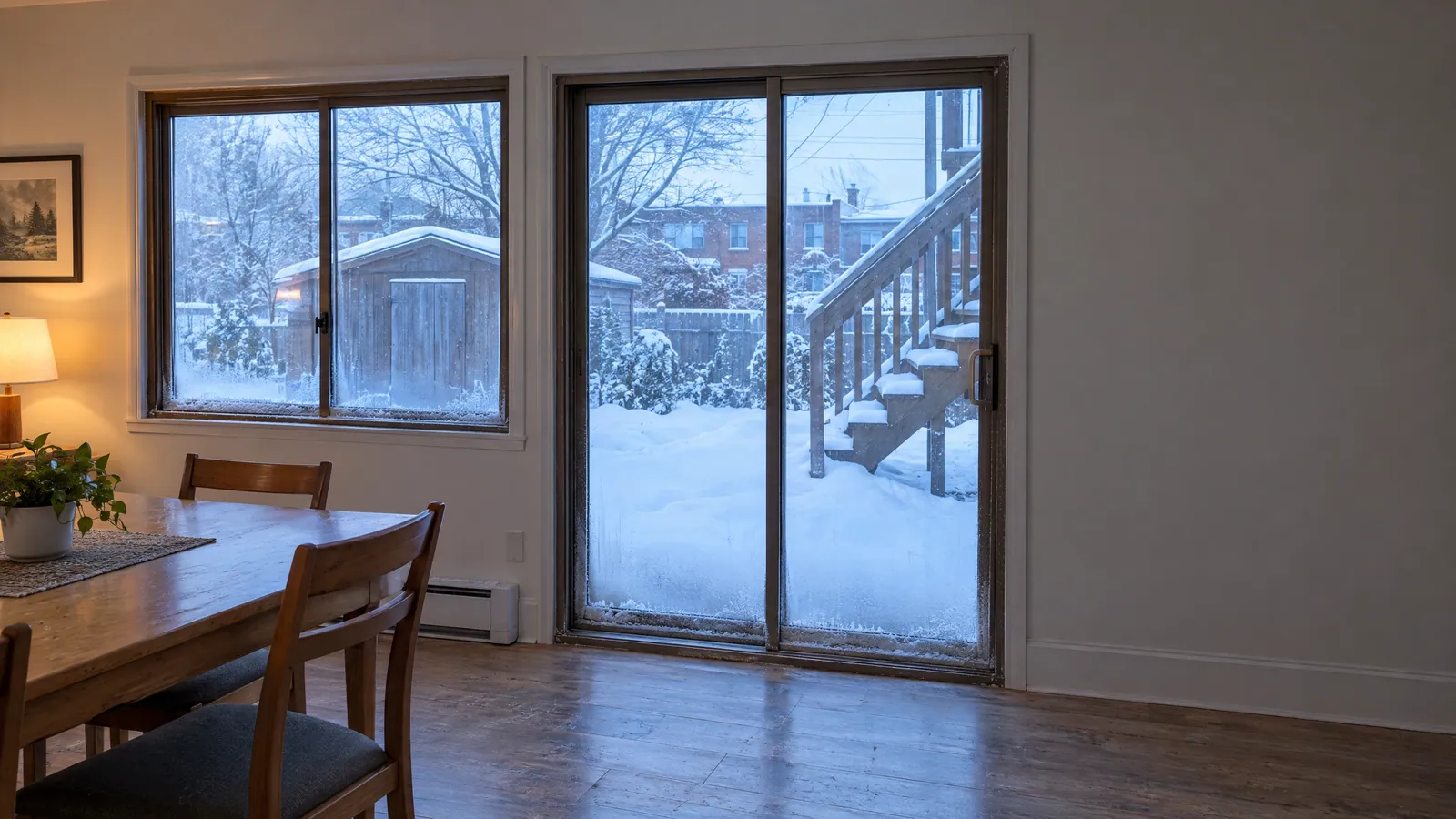
A sliding patio door, the porte-patio, raises the same questions. A door that drags, will not lock or lets cold in at the sill usually needs new rollers, a cleaned or repaired track, a new lock or new weatherstripping. A fogged panel is a thermos like any other and can often be replaced on its own. Sliding door repair covers those jobs.
Replacement makes sense when the frame is bent or corroded, the sill lets water in, or the door is failing in several ways. The City requires a permit to install or replace a sliding patio door, whatever the borough, because of rules on distance to the lot line, glazed area, fire spread and exits. Portes et fenêtres on montreal.ca.
Summary table
| Option | Suits | What you keep | Subsidy | Permit |
|---|---|---|---|---|
| Défogging (désembuage) | A fogged unit treated in place; methods and warranties vary | The unit, sash and frame | No | Ask your borough |
| New thermos | Fog, a crack or a broken pane in a sound frame | The sash, frame and hardware | No | Ask your borough |
| Hardware or coupe-froid | A crank, lock, balance or seal that no longer works | Everything else | No | Ask your borough |
| Restoring an original wood window | Sound originals, where the borough favours them | The original window | Check the RénoPlex list | Plateau: generally none outside heritage protections |
| New window | Rot, draughts through the frame, several failures at once | The opening | RénoPlex or Rénoclimat, if eligible | Most boroughs require one |
Before you decide
Take three photos: the whole window from inside, the problem up close and a bottom corner. We pass your request to an independent local pro who does that kind of work, and they tell you what can be repaired, what should be replaced, and what each would cost. Send your photos with a quote request.
Frequently asked questions
Can I replace just the thermos and keep my window?
Yes, in most cases. If the frame and sash are sound, a glazier measures the fogged or broken unit, has a new one made to size and sets it into the existing sash. The window and its hardware stay as they are. Ask your borough whether a permit applies. The foggy thermos page explains the process.
Should I replace a thermos just because of its age?
No. There is no reliable lifespan to go by, and the figures you see in advertising come from sellers. Units of the same age fail at different times, depending on how they were made, how they were installed and what they face. Instead of counting years, watch for fog or streaks between the panes that will not wipe off: that is the sign the seal has gone.
Is an old wood window worth restoring?
Often, if the wood is sound and the window is original to the building. A restored guillotine keeps the façade intact, and on the Plateau, repairing original windows generally needs no permit outside heritage protections, while Ville-Marie and Westmount favour or exempt restoration. If the rot runs deep or the frame has shifted, replacement is the honest answer.
Is it cheaper to repair or replace a window?
Replacing one part usually costs less than replacing the whole window, but the comparison only holds when the frame is sound. What drives the price is the size and type of glass, the part involved, access (a third-floor balcony door is not a ground-floor window), the condition of the frame and whether a permit is needed. Ask for a quote on both options for the same opening.
Is défogging a lasting repair?
It depends on the method and on the unit, and we do not take sides. Défogging treats the existing thermos in place instead of replacing it, which some owners prefer. Ask the provider in writing what the process does and what the warranty covers, and compare that with a quote for a new thermos in the same frame.